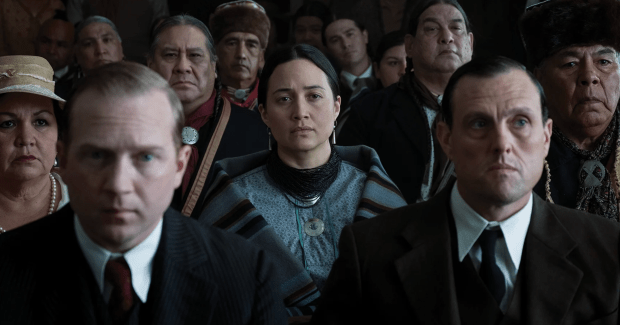
2023 has been an extraordinary year for movies. Many masters of cinema of the past few decades gave us new entries into their canon, most of which were fantastic and in some cases may be one of their final entries. Looking at my list, I see a few patterns. 2023 was certainly an excellent year for the black comedy, particular mixing dramatic genres like horror, thriller or melodrama with dark humor. It is also a year of existential dread about the state of the world (what year isn’t, these days?), and how various people might approach their place in it. Of the 63 movies I saw in 2023, these were my favorites:
HONORABLE MENTIONS

The Promised Land
Perhaps the best “modern epic western” since There Will Be Blood, The Promised Land tells the story of Captain Ludvig Kahlen (Mads Mikkelsen), an 18th century Dutchman who strives to rise above his station by doing what no one else can: grow produce on bog land possessed by the king. This brings him at odds with Frederich De Schinkel (Simon Bennebjerg), the local lord who wields his status as a club against Kahlen, trying to bully him into a huge portion of the profits. What results is a tale about a struggle of wills, a found family, and what a man might sacrifice to achieve his dream.
The Promised Land is one of several of a genre we don’t get much of anymore: a mid-sized historical epic that is very serious in its tone and dramatic in its storytelling. Napoleon and Ferrari both fit that bill this year as well, two other very successful entries into the genre. For my money though, The Promised Land was the most exciting and captivating of the bunch. (Nordisk / Magnolia)
When Evil Lurks
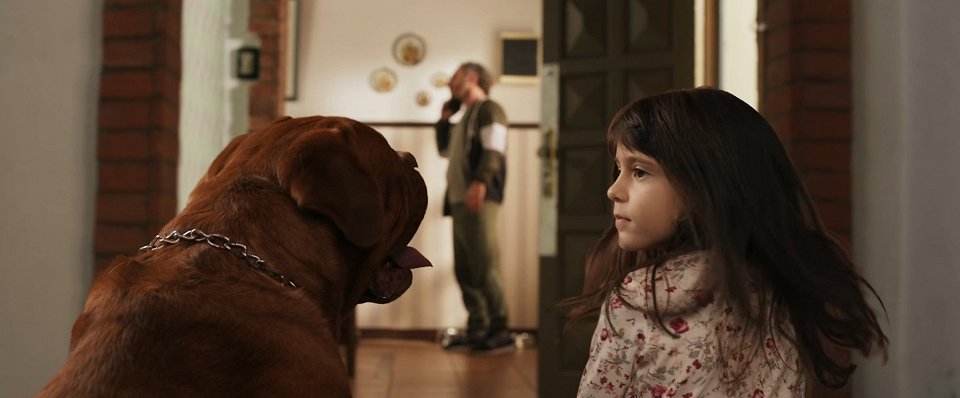
This movie should be illegal. It is easily the most disturbing film I’ve seen in years. The premise basically plays similarly to a zombie movie, but with some key deviations. The lead character Pedro (Ezequiel Rodríguez) and his brother Jimi (Demián Salomón) accidentally kick off the story when they make the fatal decision to attempt to move a “Rotten,” i.e. a living bloated corpse of a man corrupted by a terrible evil. The titular “evil” is some unseen demon capable of possessing and corrupting people and animals to do its bidding. It is contagious and has its own set of rules that are both well-defined yet nebulous. For instance, don’t do violence to something possessed, lest you also become one of the evil – and ESPECIALLY don’t use firearms. Pedro and Jimi go to protect Pedro’s kids and ex-wife, and, well… things don’t go super great.
What this movie gets right is true, unending dread. Once the events are set in motion, there is no escape from the horrors that are about to unfold, and the film will not hold back in showing you any of them. This is the kind of movie that is extremely difficult to watch, yet is impossible to look away from. I watched this film late at night in a completely empty theater (well, technically with two other people that walked out before shit really hit the fan). It disturbed me in a way that I haven’t felt since Ari Aster’s Hereditary and for me upped the bounds of what horror can be. (IFC / Shudder)

Asteroid City
You know it’s a really good year for movies when this doesn’t make my list. Wes Anderson has been adding layers of nested storytelling to his recent films (Grand Budapest has a multi-nested story, for instance, and The French Dispatch is essentially The New Yorker: The Movie). He does the same in Asteroid City, a movie that takes his style of nested storytelling to a new level as a making-of TV special about a movie adaptation of a play (I think I have that right? It’s hard to know for sure).
What impresses me most about Asteroid City is how Anderson is able to reach an emotional truth about loss and grief through one of the most circuitous paths possible. And ultimately, I think that’s what he’s going for – grief is not an emotion that can be tackled head-long, but instead needs to be processed in other ways, such as art, science, or shared experience. Asteroid City is also very much a movie about faith, about science, and how both can change dramatically as we learn more about what we don’t know. In both cases, Anderson doesn’t provide any clear answers, but instead gives some comedic thematic elements and lets the audience do the rest.
It’s an extremely rich film, and one that will only get better on rewatches. I also highly recommend Anderson’s Roald Dahl short films that debuted on Netflix this year; each of them is Anderson operating at the peak of his abilities. (Focus Features / streaming on Amazon Prime)

Leave the World Behind
Leave the World Behind is a horror comedy about the quick collapse of society. The Sandfords (Julia Roberts and Ethan Hawke) take an impromptu vacation with their children, renting an AirBnB outside of NYC. Strange technological occurrences start occurring one after another, and the owners of the house (Mahershala Ali and Myha’la) return and request a place to stay the night. Things begin to unravel from there.
Leave the World Behind is to me all at once terrifying and darkly comedic in its depiction of society crumbling. While some of its “bigger” moments are a little silly and a tad far-fetched (things like the cruise ship making landfall or Teslas running amok), there are other moments that feel all-too-real in the wake of the COVID-19 pandemic. What really sticks with me is its depiction of just how fragile our society is. Our overreliance on satellite technology is incredibly real, and a true breakdown of communication could easily lead to at least some of the events in the film.
I’m really not sure I understand the hate I’ve seen online for this film. I think perhaps people wanted more “answers,” more explanation as to what is happening and meaningful resolution at the end. To me, the lack of resolution to the mysteries is part of what really resonated. The characters in this film are not important or special. They’re not going to believably be able to solve the central conflict, or indeed even know what it is. Like any good disaster movie, their goal is to survive, and the main source of terror in the film is the not knowing what is happening. Ultimately the story is about coming together and helping the people you care about most, and being able to let down walls and bring others into that inner circle for the benefit of both groups. Also, contrary to other opinions, I think the ending is absolutely perfect and resolves one of the central conflicts, complete with one of the best needle drops of the year. (Netflix)
TOP TEN

10. Barbie (and the entirety of Barbenheimer weekend)
Hey Barbie! For one magical weekend, the cinemas were the center of popular culture again in a way that I haven’t really seen since Avengers: Endgame. The one-two punch of Barbie and Oppenheimer was incredible in how diametrically opposed the two seemed on the surface, yet how well they somehow complemented one another. This was helped by the quality of both films. I bounced off of Oppenheimer more than most due to the typical Nolan movie pacing, but I can’t deny that the film has some moments that are incredible and some of the best film-going experiences of the year.
That said, for my money, Barbie was the film of the moment. Greta Gerwig brough an absolutely incredible vision to a subject matter (a toy!) that almost anyone else would have made into something midling and ultimately forgetable. Along with her partner in writing/life Noah Baumbach, Gerwig crafts a world that is somehow both satirical yet sincere in its love of its subject matter (again, a toy!). The film is perhaps the most Millennial movie to ever exist, taking themes of existential dread and depression and painting them a luminous pink. Margot Robbie and Ryan Gosling both absolutely crush it in their respective roles, and the entire cast gives comedic performances that are some of the best of the year.
Some of the criticism I’ve seen levied at Barbie is absolutely wild in my opinion. Because the film is really excellent, some seem to expect its take on feminism to be nuanced and complexed rather than the “corporate feminism” depicted in the film. I say again, this is a movie about a literal toy line. It is designed to be consumed at the broadest of possible levels. The fact that it has anything meaningful to say about the patriarchy or corporate culture is a minor miracle. I’m thankful for the incredible film we got, rather than regretting some “missed opportunity” to somehow do more with the source material. (Warner Bros. / streaming on Max)

9. The Zone of Interest
The Zone of Interest follows an upper-middle class family in Nazi Germany whose patriarch just happens to be Rudolf Höss, the primary man behind Auschwitz. He has been hard at work to gain a promotion, and the family lives a life of luxury as a result. Like all of Jonathan Glazer’s films, The Zone of Interest is avant-guard in nature, and is not really about any specific “plot” or “story,” but instead about watching the family go about their day-to-day lives, all while the horrors of Auschwitz are heard behind the home’s fencing.
Easily the most harrowing movie of the year, The Zone of Interest is the first Holocaust movie I have seen that isn’t really about the Holocaust at all. It’s about complacency; specifically, our complacency. It holds a mirror up to the audience and asks “what horrors are you shutting out just over your personal wall?” What’s more, there are many takes on its meaning, all of which are valid in my mind. Many have read it as speaking out against the growing anti-semetic sentiment, or how Americans turn a blind eye against atrocities in other parts of the world. For me personally, I view it as an allegory for how as a society, we turn a blind eye towards climate change in the name of short-term wealth and progress.
Towards the end of the film, there is a moment where German officials are discussing the logistics of shuttling more people into concentration camps, focused purely on the efficiency of the operation rather than the atrocities being committed. I liken this to oil company executives sitting in a board room and discussing how to improve quarterly profits. Each individual is just doing their own job, playing their own role, without any concern for the collective damage being done.
Now of course, it’s easy to point fingers and say “yeah, those oil executives, look how they’re destroying the world.” But that’s not the point either. In this analogy, we are those executives simply by living our lives. It’s practically impossible to live in the western world without somehow being complicit, for instance when we take an airplane flight to see family, when we don’t consider the origins of the burger we eat, or when we throw away a disposable Starbucks cup. The Zone of Interest may not solve any of the world’s problems, but it does serve as a monument of our complicity in those problems, and indicates that history may not be kind to us. (A24)
8. How to Blow Up a Pipeline
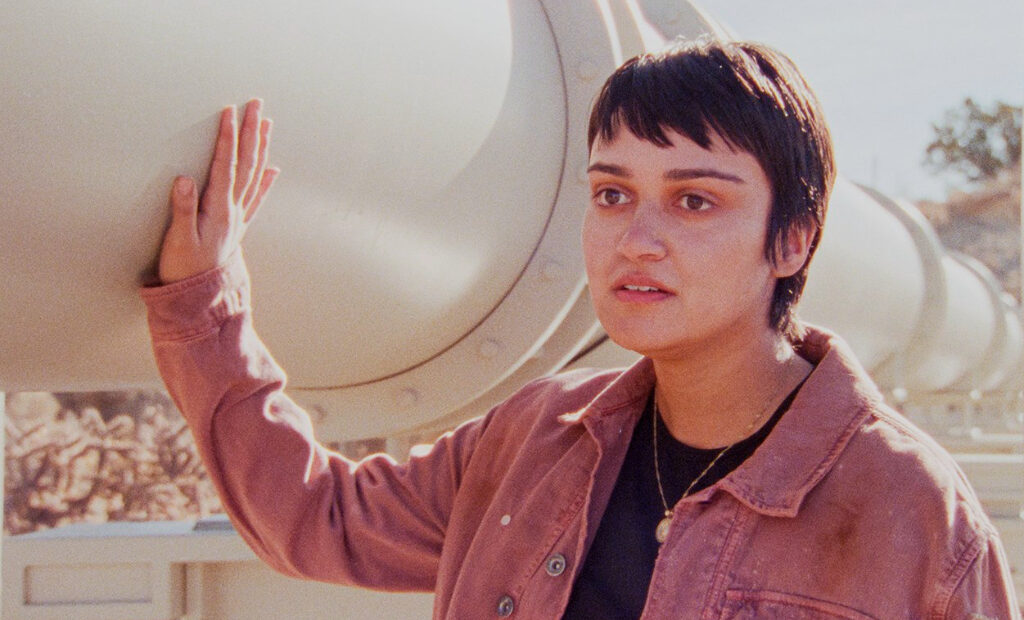
I feel like I’m being added to some list just for typing out that title. How to Blow Up a Pipeline is the perfect complement to The Zone of Interest in that it examines the extreme problems of the modern world and whether or not we’re powerless to change them. In this case, the film follows a disparate group of activists from a variety of backgrounds who have reached their breaking point. They’ve decided the only effective way to fight back against climate change is to call attention to it through an act of eco-terrorism: blowing up an oil pipeline.
How to Blow Up a Pipeline is essentially a heist movie, and like any good heist movie it’s all about the process. We watch our characters “get the band together,” develop a plan, and then see how they execute. There are a few emotional hooks into a few of the characters, which only makes the thriller more tense as things inevitably go wrong.
True to the non-narrative book on which the film is based, the movie never has any doubt in its moral convictions. For better or for worse, there is never any question that the characters’ cause is righteous, and the audience is rooting for them to succeed from the get-go. Such a message may not be greeted well by all viewers, but personally I found it to be the activist “yin” to The Zone of Interest‘s complicity “yang”. The more hopeless our collective situation feels, the more prescient this film’s take is going to become. (Neon / streaming on Hulu)

7. Spider-Man: Across the Spider-Verse
I can’t believe I’m saying this, but I am relieved that superhero fatigue finally means we might get some “new blood” in our mega-budget blockbusters. That said, in a year where the superhero bubble seems to have fully popped, we also received one of the most exciting movies to grace the genre: Spider-man: Across the Spider-Verse.
From the moment the movie begins, Across the Spider-Verse is a mile-a-minute thrill ride that just does not stop. Every single image of this film is incredibly visually creative, and it has somehow upped the ante of the already game-changing film, 2018’s Into the Spider-Verse. “Dynamic” is truly the best way I can describe the animation style. It helps too that the movie is incredibly well-written and paced, with a constant stream of heart and wit. Superlatives can’t do the movie justice, and if you haven’t watched this film (or the first) because it’s a superhero film, you are truly missing out.
My only complaint with this film is the same one everyone else has: this is very much a “Part 1 of 2.” Sure, it gives some slight closure to Gwen’s storyline, but the film’s fourth act trickles on way too long for it to be anything but a cliffhanger of an ending. If the sequel were actually going to arrive on its original schedule (looks at watch) one month ago, this could be somewhat forgiven. But as it is, we’re all going to be waiting years to see the resolution. So, look forward to Spider-Verse 3 being in my top 10 of 2027, I guess. (Sony / streaming on Netflix)

6. Past Lives
Easily the greatest “quiet drama” of 2023, Past Lives is a really special reflection on how a person is shaped through their experiences. Nora (Greta Lee) is a Korean native whose family moves to the United States when she is a child. She digitally keeps in touch with her best friend Hae Sung (Teo Yoo) throughout her young adulthood. However, she eventually meets white American Arthur (John Magaro) and sparks a romance that leads to marriage. Now Hae Sung is visiting the States, and there is undeniable chemistry with Nora as the two pine for what might have been.
You may think that you have seen this type of movie before and know how it’s going to play out, but Past Lives is wholly unique in how it approaches the situation. Every decision that writer/director Celine Song makes feels extremely true-to-life, and at every turn she refuses to take the “easy way out” in the story. The characters are fully-realized, and the film really captures complexities like the loneliness that comes with long-distance relationships, the jealousy of being unable to share in some part of your loved one’s life, and the nostalgia that comes with remembering the person who you used to be and realizing that you can never go back. (A24 / streaming on Paramount+)
5. The Killer
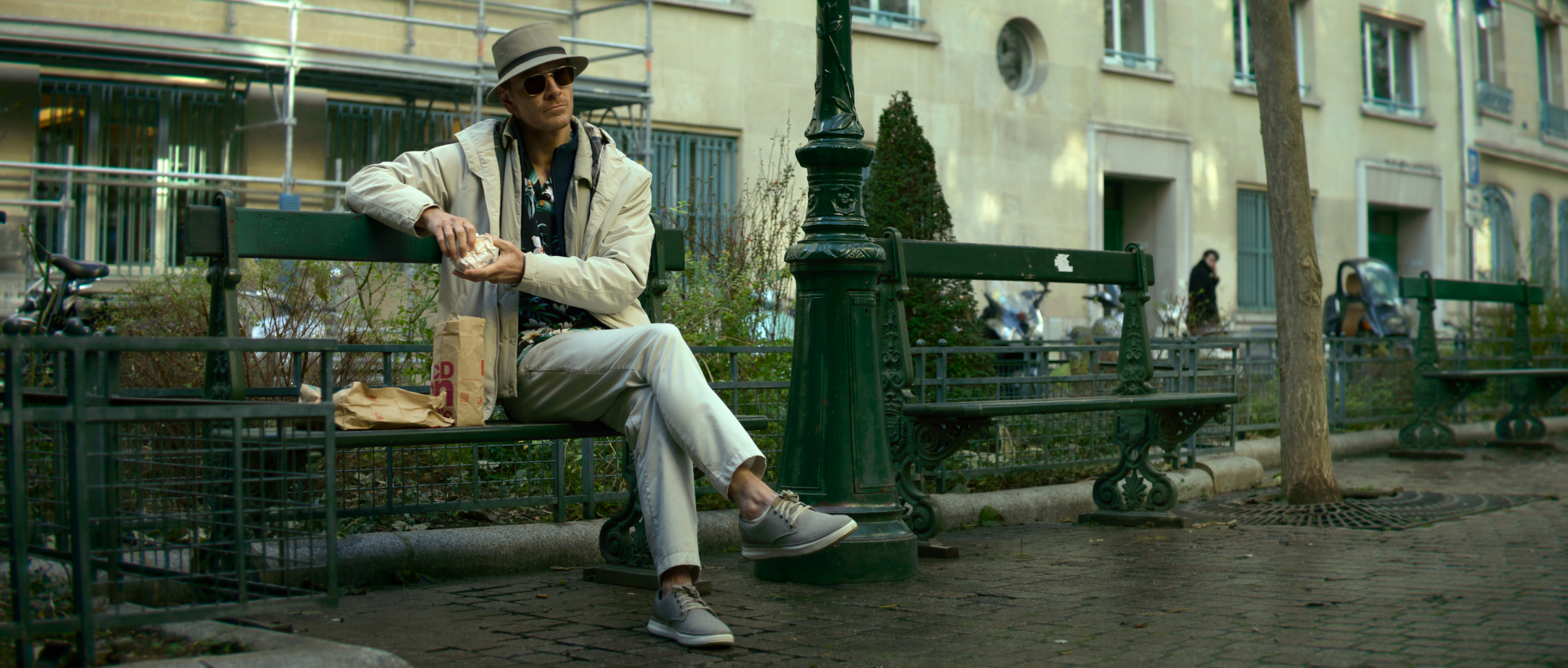
I find it incredibly rude that The Killer is widely dismissed as “lesser Fincher.” This movie is yet another excellent entry into the Fincher thriller canon, and one that is saying a lot more than people give it credit for. Having watched a lot of films in Fincher’s filmography this year, I can say that while he doesn’t ever miss, there are films that don’t gel with me. Some of his earlier works, like The Game or Panic Room are infinitely rewatchable but aren’t really saying too much in my opinion.
The Killer is not that. The Killer is making commentary on modern capitalism in a way that honestly isn’t too dissimilar to the more direct commentary of The Zone of Interest. In the unnamed assassin’s (Michael Fassbender) world, everything is disposable, murdering is a gig, and the wealthy buy and sell lives without a second thought to the consequences of their purchases. The only time a character gives a second thought to the pain they inflict on others is when it directly impacts their own lives or the people they love, as is the case when the killer goes on a revenge spree when his girlfriend is grievously wounded.
The Killer is also almost certainly a self-deprecating meta-commentary on Fincher’s filmmaking style. The lead character is constantly reciting montras to himself, making himself out to be some expert in his field, while frequently disregarding his own advice and letting his actions say something completely different. Some people read him as incompetent, but that is hardly fair at all; in fact, the assassin succeeds time and again in his mission, even as he makes mistakes and has to “improvise” rather than “sticking to the plan.” Frequently it is exactly what he cautions against that leads to his success. To me, this is an obvious playful commentary on Fincher’s own process, all the way down to the final shot of the film. The Killer is an excellent entry into the Fincher filmography, and my only real knock against it was that I watched it on my couch rather than in a theater. (Netflix)
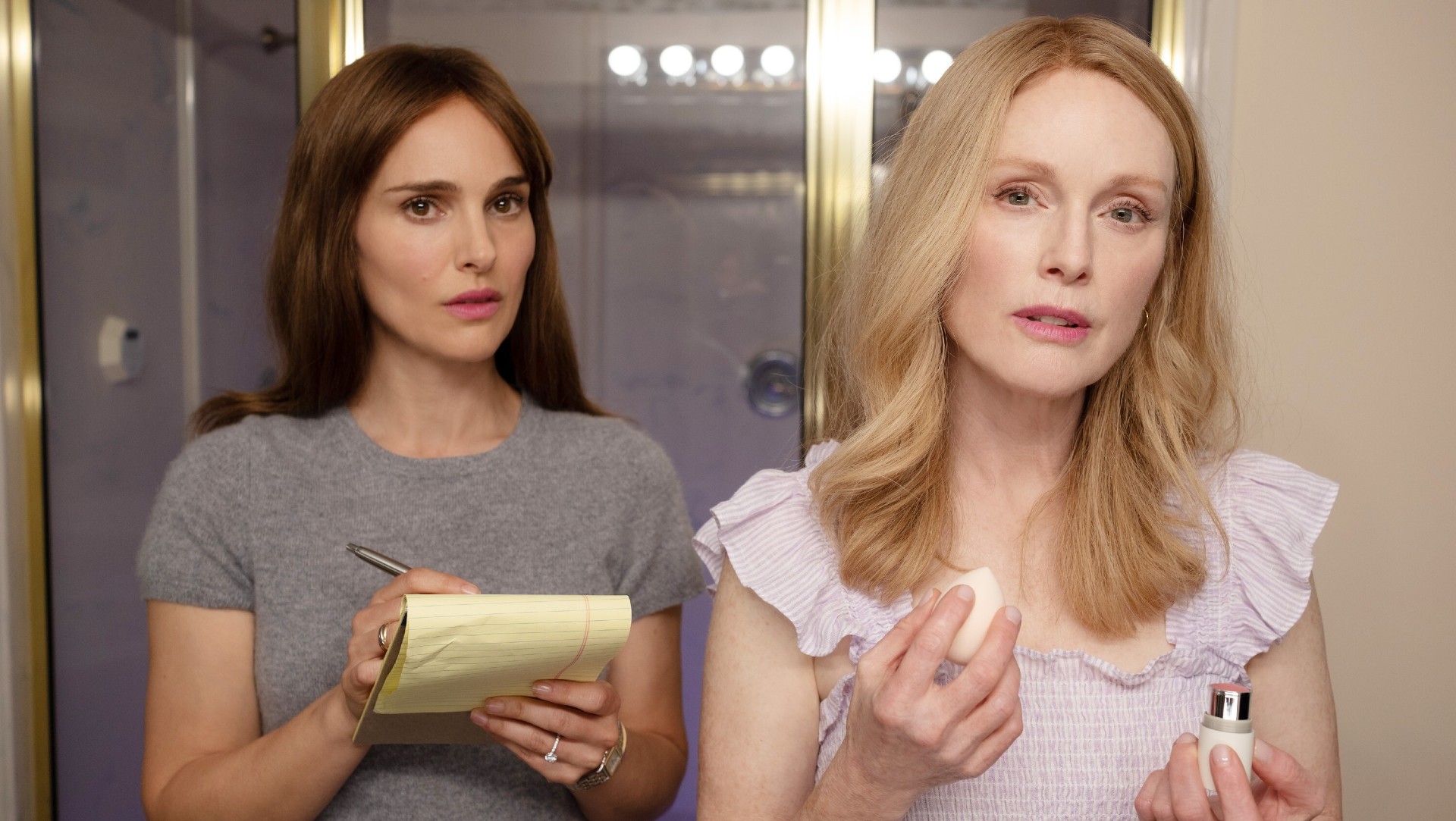
4. May December
This movie is like an onion, and paraphrasing Natalie Portman in the film’s final scene, the more you peel back the more real it gets. May December is a loose adaptation of the life of Mary Kay Letourneau (though it is more based in reality than I originally thought; watch the interviews). Prior to the events of the film, a 36-year-old Gracie Atherton had an affair with her 13-year-old co-worker Joe Yoo, abandoned her family, and eventually went to prison. All of this happened two decades ago; as the film starts, Gracie (Julianne Moore) is now in her 50s and Joe (Charles Melton) in his 30s, and the two have children of their own together. I’ve said all of this, and yet the real premise of the movie is that actress Elizabeth Berry (Natalie Portman) is going to play Gracie in a film, and is meeting with the family to do research for the character. If all of that seems complicated, well… it is, but that’s part of what gives the film its depth.
For me, this movie has two primary themes on its mind. The first is something of a character piece, examining the dynamics of such an odd relationship and how it harms and traumatizes basically everyone involved. As Moore’s character reminds us multiple times, this is what 13-year-old Joe wanted, but it has led to a stunting of his emotional growth in a way that he never could have known as a child. And that’s to say nothing of the children in both of Gracie’s families whose lives are completely shaped by the affair and marriage.
The second theme is all about acting. This is most obvious when it comes to Portman, who is playing a character that’s studying another character portrayed by Moore based on a real-life person Mary Kay Letourneau. Elizabeth is convinced that she can find some ecstatic truth that she can use to shape her performance, and is willing to dig up other peoples’ traumas to get it. The film is frequently a satire of the acting process, and we are meant to see much of what Elizabeth does to mimic Gracie as a farce. But also, there is a moment where everything clicks, and she is finally able to create a masterful performance despite her ridiculous process.
But all of that aside, if you want the real reason this is so high on my list: this movie is hilarious. From the awkward situational humor to the over-the-top melodramatic score, this film is the picture of black comedy. Haynes knows exactly what he’s building here: a film that at its surface takes itself very seriously, but the truth is revealed as that surface is peeled: “it’s not that kind of thnake.” (Netflix)

3. Beau is Afraid
What if everything is exactly as terrible as you think it is, and you’re exactly as bad a person as you think you are: The Movie! Beau is Afraid is literally designed as a full-length anxiety attack, a three-hour fever dream of a movie. If that doesn’t sound like “your thing,” well… you’re probably right! I would not recommend it to anyone who doesn’t like the pitch. But if that sounds up your alley, buckle in for one of the most innovative movies of the year.
Ari Aster is one of the most creative filmmakers of his generation. Even when his films don’t “click” on first watch, they linger… and linger… and linger. He has such a handle on a brand of terror that just sits under your skin as you watch. In the case of Beau, he creates a fully surreal anxiety attack portrayal of a New York City. Beau walks outside and is immediately attacked by druggies and muggers. He leaves his keys in his door and turns his back for an instant, and they disappear – now someone has access to his home. This same surreal “everything goes wrong in horrible ways” continues throughout the movie, following Beau at every turn.
I’ve heard people claim this movie is too long, and in particular, that the artificial mid-movie stage play sequence is too much. Too long is debatable, but the stage play is crucial to the film. The play is the one time that the movie truly slows down, that the infinite anxiety is finally quelled. Beau imagines himself in the story, imagines that this is his life. In entertainment, he is able to lose himself in the story, and for a brief moment all of his worries melt away. The story continues until a plot point reminds him of his fears, and how this can’t be his life, can never be his own life – and suddenly, the film is back at a full sprint of anxiety-fueled heartache and pain. (A24 / Paramount+)

2. Blackberry
I’M FROM WATERLOO, WHERE THE VAMPIRES HANG OUT. With all due respect to the other “product-creation” films of 2023 (Air, Tetris, Flaming Hot, etc), none of them hold a candle to Blackberry. Not since The Social Network has a film about the creation of a product had so much wit and pathos. Blackberry mainly accomplishes this with a tightly-written script framed as a Shakespearian tragedy. We know how this story is going to go: the company has enormous success in the 2000s, only to lose its marketshare practically overnight to Apple. It’s this “rise and fall of Rome” that drives every moment of the film, and provides the perfect framework for the slow corruption of its lead character Mike (Jay Baruchel).
The other element that makes this movie tick is its sheer wit and humor. The dysfunctional marriage between the brilliant-but-näive cofounders of the company Mike and Doug (Matt Johnson) and the agro-bully business sense of its CEO Jim (Glenn Howerton) is absolutely intoxicating to watch, and the highlight of the movie is when the two somehow work together in harmony in spite of their “oil and flamethrower” nature. I work in the tech industry, and have worked at several startups now, and while Blackberry doesn’t at all reflect my personal experiences, I find it completely believable in a heightened Hollywood way.
Of course, this film is completely fictional, and like The Social Network, it should NOT be taken as an accurate depiction of what really happened. But for my money, this is the most rewatchable movie of the year. I recommend it to anyone – like literally, I have been recommending it to anyone who will listen. (XYZ Films / streaming on Hulu)

1. Killers of the Flower Moon
It’s hard to put into words how incredible Scorsese’s latest is, and what a miracle it is that it exists. His original adaptation of the novel was going to be far more straightforward: a crime story from the perspective of the FBI. But as more research came to light and indigenous collaborators became involved, Scorsese and Eric Roth made the choice to start again from the Osage perspective. And what a difference that decision made for this film.
In many ways, this feels like the capper for Scorsese’s career. Like The Irishman, it takes elements of his mob movies like Goodfellas and Casino and completely reframes them from the perspective of the victims. Where it succeeds is making its lead character Ernest Burkhart (Leonardo DiCaprio) completely unlikeable and an utter buffoon. Nothing about the “organized crime” depicted in the film is glamorous, instead leaving the audience to pray for Mollie (Lily Gladstone) and the Osage peoples. The result is a film with the pacing of a crime movie and the heart of a tragic historical drama.
The true masterstroke of the movie, though, is its ending. While I won’t spoil it here, the ending is daring in a way that few others are, and showcases just how self-aware Scorsese is about the story that he is telling. It’s hard to believe that the man is still making masterpieces at this stage in his career, but I say without exaggeration that this stands abreast with his very best. (Paramount / Apple TV)
 Backseat Directing