
2024 was a fairly strange year for movies. With the Hollywood strikes ending at the beginning of the year, many of the largest films were pushed out to 2025. That said, there were tons of excellent film offerings, especially from smaller studios like A24, Neon, Focus, and Searchlight. Of the 72 films that I saw this year, here were my favorites.
HONORABLE MENTIONS

Hard Truths
This is a film that I watched very late as a “catch-up,” and it’s exactly why I like to see as many films as I can before making my list. Hard Truths features perhaps the best performance of the year by Marianne Jean-Baptiste who plays the deeply unhappy Pansy. Pansy is mentally unwell and clearly in a lot of physical and psychological pain, and consequently inflicts constant torment on everyone around her – especially family. Everyone has met someone like this, either as a friend or family or just in a checkout line as someone berates the cashier for simply doing their job. Hard Truths explores the psychology of someone like that, the damage they can inflict, and the impact that a simple act of love can potentially have if it breaks through to someone who feels nothing but misery. (Bleeker Street / VOD)
Conclave
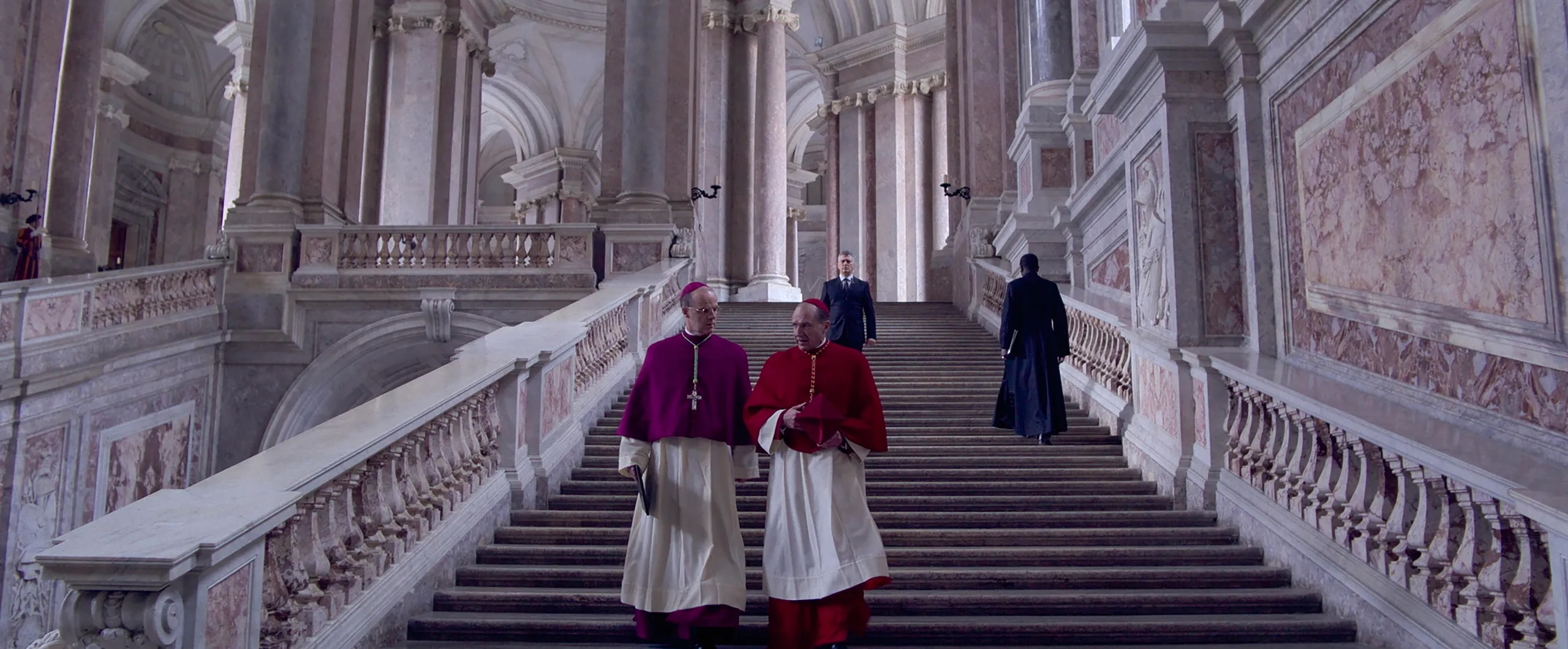
We just don’t get enough papal thrillers these days. Conclave is the ideal kind of mid-budget “movie for grown-ups” that we just don’t get much of anymore. It’s a political thriller that’s equal parts dramatic and mysterious, holding the audience’s attention by providing a look into a normally highly opaque process. The film is beautifully shot, largely on-location in Rome, contrasting the modern technologies like cellphones and vape pens with the archaic tradition of selecting a new pope. The film also has a surprising amount to say about modern world politics, and as an American its position on compromise feels like one of the final films of the Biden era. (Focus Features / Peacock)

Dune Part 2
Should Dune Part 2 have made my top ten list this year? Denis Villeneuve’s sci-fi saga is truly the Lord of the Rings of the 2020s, creating an unbelievable world out of a book that was largely thought to be impossible to properly adapt. While I have a mild preference for Part 1 (I also prefer the space politics and intrigue of the first half of the book to the religious fantasy of the second half), Part 2 is arguably an escalation of the first’s scope, in particular providing one of the most incredible scenes of the year as Paul rides a sand worm for the first time. Fair or not, I ultimately left this off the final list because it’s a movie that has already been seen by millions of people, and I don’t have much to say about the film that hasn’t already been said. I have found both entries to be incredible achievements, and I very much look forward to the final chapter, Dune Messiah, coming in the coming years. (Warner Bros / Max)

The Wild Robot
How to Train Your Dragon was one of my favorite movies of the 2010s, and I was hugely excited to see Chris Sanders’s spiritual successor, The Wild Robot. I’m very happy to say the film really delivers. Lupita Nyong’o plays Roz, a helper robot that is mistakenly activated in the wilderness in the distant future. At a loss for purpose, she learns the languages of the local wildlife, and becomes the matriarch of the woods.
This movie is touching, fun, and just lovely all the way through. Really it’s a film about the trials and sacrifices of motherhood, and finding satisfaction in a frequently thankless task. It definitely made me cry at least once, and I think it’s safe to recommend to anyone over the age of 5. (Universal / Peacock)
TOP TEN
10. Hundreds of Beavers
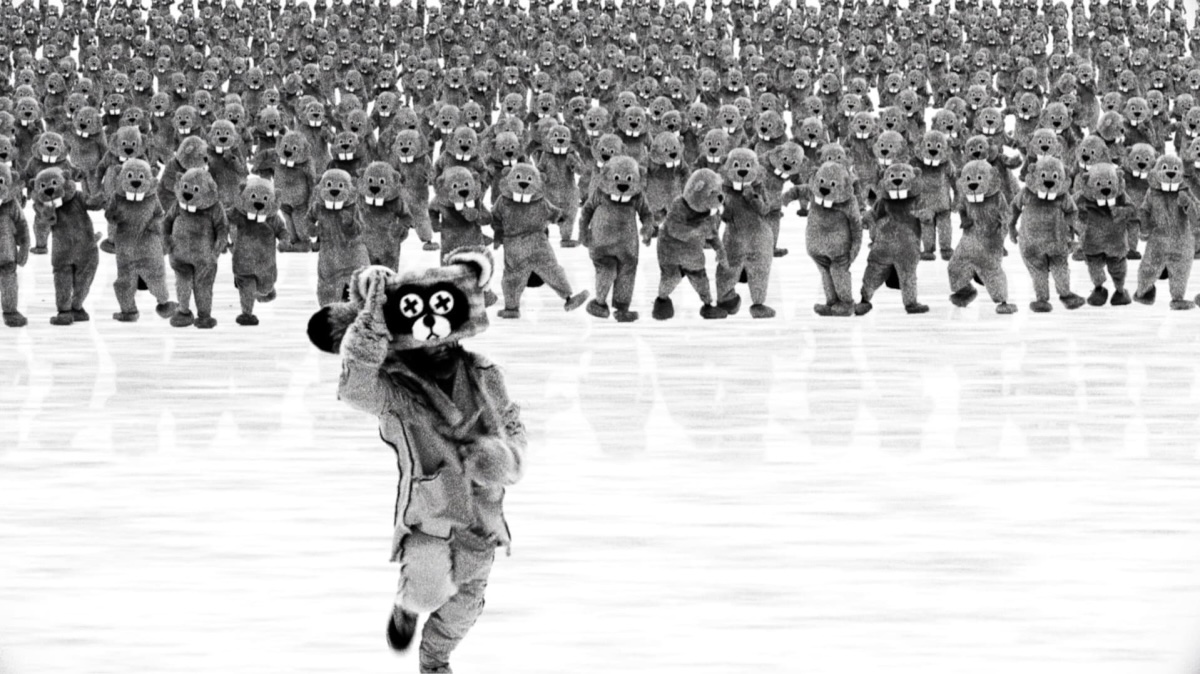
I have in the past participated in the 48-Hour Film Festival, a filmmaking competition in which teams have two days to write, direct, and edit a four- to seven-minute short film. At the end of it, your film gets screened with around fourteen others. The quality always varies significantly, but you’ll always see a few that are from some of the most creative people you’ll meet. You’ll marvel at the sheer ingenuity of what those creators could manage with extremely limited time and resources. Hundreds of Beavers in many ways feels like the best of a 48 Hour Film, stretched out to 108 minutes and given room to become an instant cult classic.
And yet, the above description does Hundreds of Beavers a disservice. The movie very much harkens back to the films of Buster Keaton and the madcap humor in old Looney Toons cartoons. While the movie can be boiled down to a long series of gags, it is also surprisingly patient in its storytelling, allowing for the momentum to build and build to a satisfying climax.
Perhaps most importantly, the gags are hilarious, and their low-budget nature is key to what makes the film special. Each of the titular hundreds of beavers is played by a person in a beaver costume. Replace those beavers with CGI, or turn the whole movie into a literal cartoon, and the film would fall flat. But the dedication to the low-budget bit and the willingness of the film to poke fun at itself is what makes it such a delight. I have yet to see this with a crowd, but I have heard it plays like gangbusters when given a proper receptive audience. (Tubi / Prime Video)

9. Nosferatu
Robert Eggers is the man. Every one of his films is expertly crafted to a clear vision that is uniquely his, tailored to the historical time period in which it takes place. Nosferatu is no exception. Off of the (relative) financial success of The Northman, Eggers remakes the silent film horror classic into the creepiest gothic romance you’ll find in the 21st century.
From the opening scene, it becomes clear that this is basically the “The VVitch: Transylvania,” with the same unsettling feeling dripping from every scene. All of the performances are top-notch. While Bill Skarsgård makes for a phenomenally nasty Count Olaf, it’s really Lily Rose-Depp that shines and delivers some of the film’s most chilling moments. Nicholas Hoult is also providing some of his best work as the male equivalent of “damsel in distress,” deftly walking the line between potential hero and naive soul desperately out of his depth. Nosferatu was a huge success both critically and commercially, so I can only pray that Eggers continues to convince studios to allow him the latitude to create interesting cinema under the guise of genre projects. (Focus Features / Peacock)
8. Babes
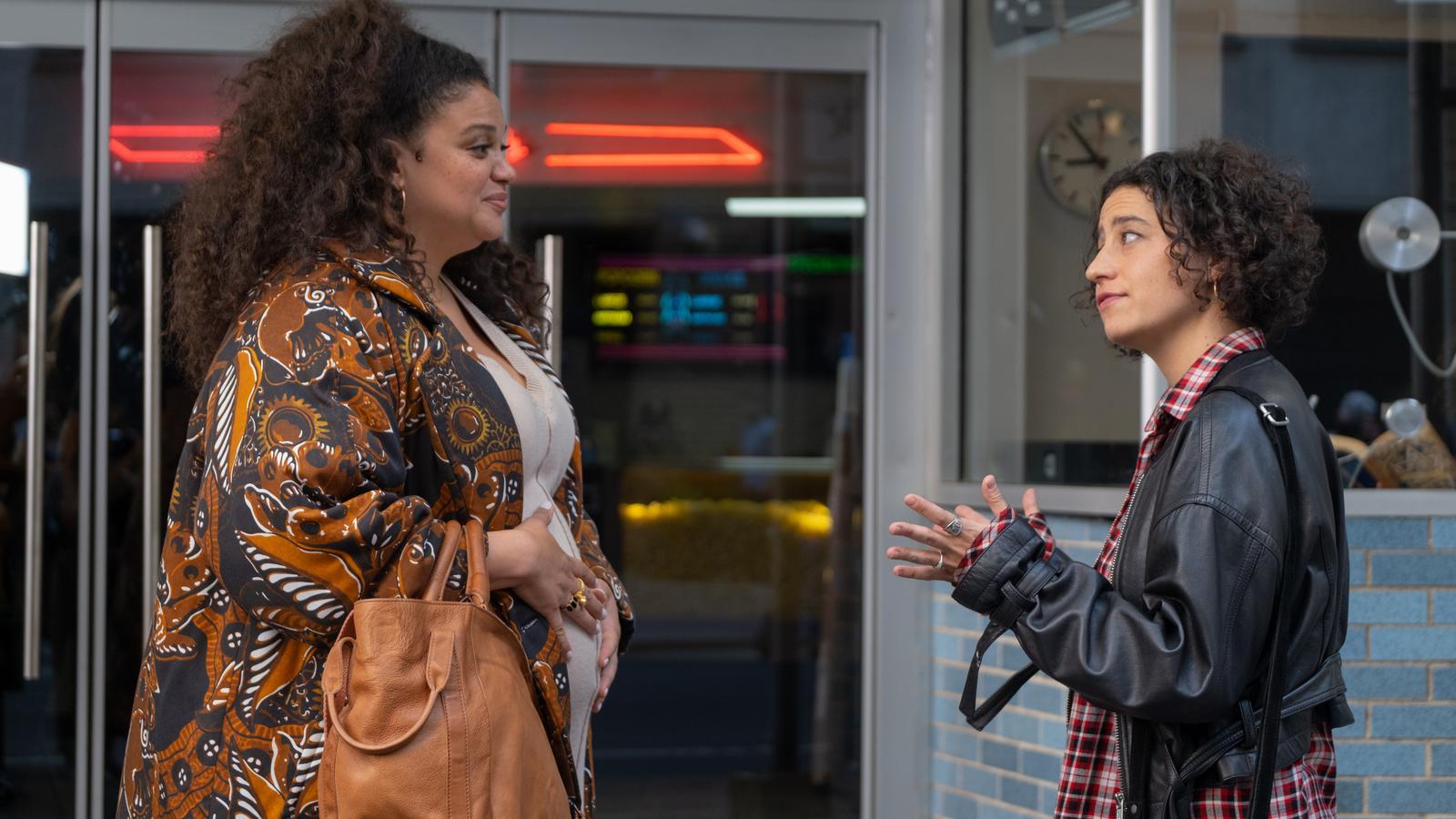
Too often, pure comedies are ignored on “best of” movie lists for the year (including on my own list). Babes is a film that I found a really exceptional entry into the genre. As with any comedy, the core reason is simple: the movie is really funny. But in addition, the film is one of the few to really explore a subject that 85% of U.S. women will experience at some point in their lifetime: pregnancy.
The film follows two best friends Dawn (Michelle Buteau) and Eden (Ilana Glazer); the former has just had a second child, and the later has an unexpected pregnancy and is preparing to be a single mother. The comedy is fairly large and occasionally crass (think Bridesmaids), and centers around the need for lady-to-lady friendships for love and support when the going gets tough. The movie is a hilarious female-driven comedy, and one that will stand the test of time. (A24 / Hulu)

7. Civil War
Sigh. A thriller about the consequences of fascist U.S. president taking an unconstitutional third term and firing on U.S. citizens that sadly becomes more and more relevant by the day. Like many Alex Garland movies, this didn’t hit me as hard when I first saw it, but so many sequences have stuck with me as we enter further and further into “unprecedented times.”
A lot of people decried this film’s politics (or “lack thereof”) at the time, which I think is completely off the mark. Yes, the film is somewhat vague about its politics and doesn’t explicitly remark on the morality of the war, but it’s only because that’s not what the film is trying to do. The movie is instead giving as “ground level” an approach as possible, providing a window into the potential consequences to regular citizens. It emphasizes both the importance of journalism and its inherently exploitative nature. It is also commenting on the activism of youth, and how their mentors grow more risk-averse as they age. Those mentors do all they can to try to prevent their juniors from taking the risks they did when they were young, but ultimately it’s the next generation that are positioned as the drivers of change.
There’s something extremely powerful to seeing a warzone on familiar territory. One of the film’s “stickiest” sequences for me is when the journalist crew travel through a seemingly unaffected town in the middle of contested territory. When a shopkeeper is asked if she knows that a war is going on, she responds that “they just try not to think about it.” I can’t help but sadly relate to that sentiment, and feel that a huge portion of America is currently feeling the same way. (A24 / Max)

6. Flow
What if there were an animated film about a house cat trying to survive a flood in a post-human world? And in its journey, it encounters a Labrador, lemur, capybara, and secretary bird that all work together to survive? In the ideal case, most people would envision a Pixar or Dreamworks film not too dissimilar from The Wild Robot, where the animals are generally anthropomorphized and talk to one another to solve problems as they arise.
Flow, instead, takes the opposite approach. Created by an extremely small Latvian creative team in the open-source animation software Blender, Flow tells its story with animals that almost entirely act like, well, animals. There is no dialogue in the film, the movements are expertly recreated, and aside from some exaggerated teamwork and problem-solving, it is a mostly realistic depiction of how animals might fare on their own.
To me, this film is about a community coming together in crisis, and the importance of putting differences aside in the name of survival. While it does frequently feature animals in peril, this is a film that can be enjoyed by practically all ages, and I have heard of both children and pets that have been absolutely captivated watching Flow. (Janus Films / Max)

5. Nickel Boys
If someone wanted to argue that this is the most groundbreaking film of 2024, I would be inclined to agree. Nickel Boys is a bold adaptation of the Colson Whitehead book. Elwood (Ethan Herisse) is a Black teenager growing up in the South during the Civil Rights era, and is wrongly arrested for accidentally being an accomplice to grand theft auto. He is taken to a “disciplinary academy,” Nickel Academy, that is extremely abusive to its “students,” but particularly so to its Black students, torturing them and even, at times, murdering. There he meets Turner (Brandon Wilson), and the two form a firm friendship.
The revolutionary element of the film is its use of first-person perspective to put the audience directly into the shoes of its two protagonists. Employing first-person POV is very common in literature, but rarely deployed in cinema because it is inherently difficult to do so. It is crucial to the storytelling of Nickel Boys, and an extremely bold act of adaptation.
The film is also about the two opposed viewpoints of its leads, one of whom puts faith in the system as a whole and wants to use its levers to be released, and the other a jaded cynic that believes that the system can never change and will never care about people like him. I’ll be vague to avoid spoilers, but ultimately the film eventually comes to the conclusion that both are right, and that through strife and sacrifice, the two approaches can work together in harmony to generate progress over time. It’s a film that honors the sacrifices that previous generations have made, and highlights that many decades later, there’s still so much work to be done. (MGM Amazon / VOD)
4. Red Rooms
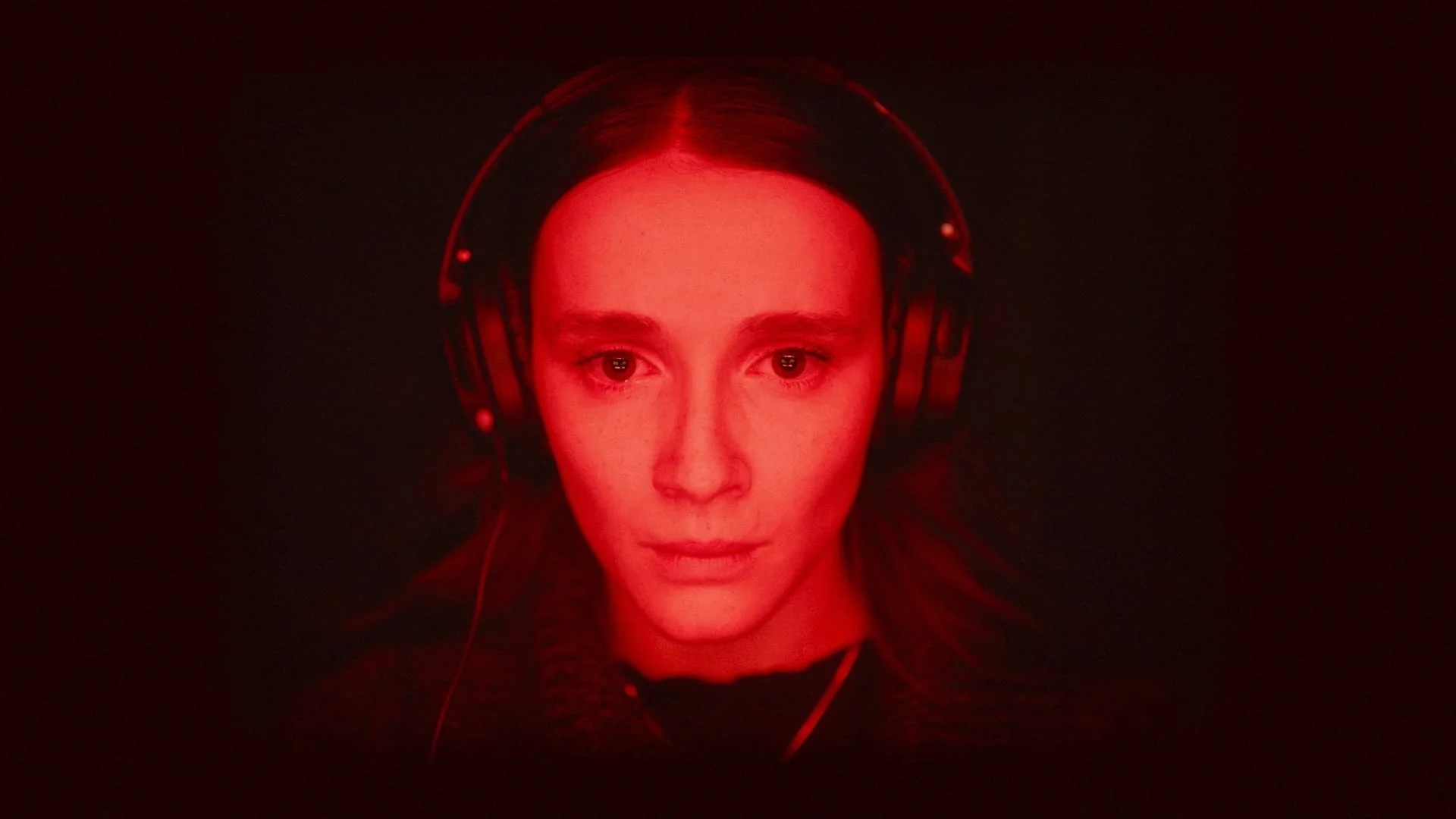
Red Rooms is essentially The Girl with the Dragon Tattoo, but instead of an explicitly traumatized Lisbeth Salander, we have a conventionally beautiful and morally gray Kelly-Anne (Juliette Gariépy) attempting to investigate horrendous murders of teenaged girls filmed and sold on the dark web. It is one of the most realistically disturbing films in years, and one that is an enigma from start to finish. Kelly-Anne is attending the trial of the primary suspect for the murders, while also digging for proof as to his guilt or innocence. Her motivations are kept completely obscured from the audience, leaving us to wonder what is compelling this brilliant model to devote all of her time and resources into investigating the case.
Red Rooms is perhaps the most David Fincher film not directed by Fincher, with a tone as suspenseful as its subject matter is bleak. As someone who knows very little about the dark web but knows a lot about tech, it seems to me to be the most accurate depiction of the dark web put to film and extremely well researched. It is not a film for the faint of heart; while the film thankfully withholds its most graphic violence from the viewers (at least visually), watching the reactions of characters seeing the footage is nearly as sickening. It really drives home a message about the modern obsession with surface-level true crime, while exploring the psychology of someone who stares into the abyss of true depravity. On that cheery note… if you’re the kind of person who can watch/appreciate Se7en (a film I don’t even really like to be honest), then check this out. If not… it’s okay to skip this one. (Shudder / VOD)

3. Anora
When Red Rocket came out, I posted that anything Sean Baker makes is a must see. Well, Sean Baker made another movie this year, and it deserves every bit of the hype that it is getting. The wild thing is, I don’t think Anora is my favorite of his films (that probably goes to The Florida Project or Red Rocket), yet it is the complete package of what makes him such a talented, unique filmmaker. Nobody films the fringes of society, and particularly sex work, quite like Baker. He has the ability to capture specific lived experiences, and then apply a message perfectly tailored to the modern day American class experience.
I’ve heard Anora called an American Cinderella story, and the first act somewhat is. Stripper and sex-worker Ani (Mikey Madison) is solicited by Ivan (Mark Eydelshteyn), the son of a Russian oligarch living in Long Island. Everything goes great at first, as Ivan gives Ani the opportunity to have a life she’s never dreamed of, full of partying, excess, and most importantly, financial security. The two fall for each other and get married, all while the audience recognizes that the situation is completely unsustainable and the other shoe is about to drop. It’s really the film’s second act where it comes alive; once the shit hits the fan and the problems that the couple has been avoiding start to catch up with them.
One thing that I think the trailers missed is just how funny the film is. Anyone who has seen Baker’s other films know that he has a great sense of humor, even when dealing with quite heavy subject matter. Anora walks a tightrope between tension and comedy extremely deftly, managing to keep the film from becoming an overly intense Safdie Brothers film by sprinkling in madcap humor. He is a master of tones, and through Anora‘s runtime he is able to conjure romance, comedy, genuine dread, and heartbreak, all with masterful effectiveness. There’s a strong chance that Anora takes home the grand prize at the Oscars this year, and if so it will be one of the most deserving winners of the past decade. (Neon / VOD)

2. I Saw the TV Glow
At its best, movies in general and horror films specifically are able to expose a truth about peoples’ experiences that is otherwise difficult to express. While I Saw the TV Glow is more of a melancholy drama than horror, that’s the magic that it’s able to achieve. On the surface, the film is about two adolescents, Owen (Justice Smith/Ian Foreman) and Maddy (Jack Haven) that fundamentally don’t fit into their 90s suburban culture lives and bond over a television show, The Pink Opaque. As the film goes on, a darker mystery begins to unfold. But the subtext is where the film really shines, in two specific areas.
The first is the obvious, the relationship that people (especially young people) can have with media, in this case, television. Teenagers in particular feel all sorts of strong emotions as they grow and develop into adults, and many times don’t necessarily have the words to express what they are feeling. Sometimes, particularly during times of emotional distress, television shows are able to “connect” in a way that friends and family may not be able to. I Saw the TV Glow encapsulates that feeling more effectively than any story I’ve never seen before.
The second and more meaningful subtext involves the reason for the characters’ dejection, an allegory for the trans experience. The ending in particular absolutely knocked me out, and requires [spoilers]. If you’re planning on seeing the film, I highly recommend seeing it for yourself without knowing its ending.
Owen and Maddy don’t feel like they belong in their lives and don’t feel comfortable in their bodies because they fundamentally don’t. The TV show they obsess over is their real lives, and they’ve been trapped in a horrible dream by the show’s villain, Mr. Melancholy. Maddy (now Tara) returns to Owen’s town, trying to save him and guide him back to his real life as Isabel. The only way to realize that life is by killing Owen so that Isabel can be born anew. But the heartbreaking reality is that Owen rejects the call, running from Maddy and effectively rejecting his real life. The final 10 minutes play out, and we see a broken Owen go through the motions of his life, refusing to take control of his own life. Decades later, there’s a brief moment of recognition that Owen’s entire life has been a lie, but… it changes nothing. Life goes on, as it always has, and Owen remains living yet lifeless. Ultimately I Saw the TV Glow is about people who don’t feel at home in their own bodies, in their own lives, and while it’s certainly valid to be truly afraid of embracing another life, the consequence can be not living at all. (A24 / Max)

1. Challengers
I see a lot of movies over the course of a year; not nearly as many as film critics or the people who podcast about film on a regular basis, but somewhere around 70 a year. Every so often, after seeing enough movies I’m non-plussed about, I start to wonder if maybe my love of film is fading. And then, I’ll see a movie like Challengers, and be totally reinvigorated about modern cinema.
Challengers was bar none the most fun I had at the cinema this year. It’s a gripping drama about the love/hate triangle between three top tennis players, and their ever-evolving relationships. But that log-line doesn’t do the film justice. Really, it’s a tense thriller about the drive to succeed and the lengths to which professionals will go to achieve their goals.
The propulsive force behind Challengers is the phenomenal performances of the three leads. Art (Mike Feist) and Tashi (Zendaya) are a famous tennis power couple. Art is participating in a lower-tier “challengers” tournament, when a lower-tier pro Patrick (Josh O’Connor), also signs up. I don’t want to get too into the details of their relationship, as discovering it as the plot unfolds is a major part of the fun, suffice it to say that the drama is high. Meanwhile the Trent Reznor/Atticus Ross score goes hard, sending what could be a low-key drama into edge-of-your-seat thrill ride territory.
I was completely locked in for the entirety of Challenger‘s runtime, and I can recommend it to anyone looking for a sexy, thrilling, romp of a film. (Amazon MGM / Prime Video)
 Backseat Directing